Pare
  • Home
  • About Us
  • What We Do
  • Who We Work With
  • Blog
  • Contact
  • Menu Menu

Procurement Is More Than Running a Tender

July 8, 2026/in Procurement/by Helen

Why Stakeholder Engagement Delivers Better Cost Reduction

When many businesses think about procurement, they picture a tender exercise – sending out a specification, collecting supplier bids and selecting the lowest price.

In reality, that’s only one part of the process.

A successful procurement project isn’t defined by how well the tender is written. It’s defined by the outcome it delivers. Did it achieve meaningful cost reduction? Did it improve supplier performance? Did it reduce risk? Was the implementation successful? And perhaps most importantly, did the business actually adopt the new solution?

The difference between a procurement exercise that delivers lasting value and one that falls short often comes down to one thing: stakeholder engagement.

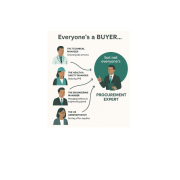
At Pare, we’ve seen first-hand that the most successful indirect spend reduction projects are those where the right people are involved from the very beginning. Procurement should never happen in isolation. It is a collaborative process that combines commercial expertise with operational knowledge to achieve the best possible outcome.

Why Procurement Isn’t Just About Cost Reduction

Cost reduction is often the catalyst for reviewing supplier spend, particularly when it comes to indirect spend categories such as PPE, waste management, cleaning services, mobile communications, laboratory testing, stationery, utilities and facilities management.

However, selecting the cheapest supplier doesn’t necessarily represent the best value.

A lower-cost product that fails to meet operational requirements can quickly create hidden costs through increased consumption, reduced productivity, employee dissatisfaction or quality issues. Likewise, choosing a supplier without considering service levels, delivery performance or implementation support can lead to disruption that outweighs any initial savings.

Effective procurement balances commercial savings with operational suitability, supplier capability and long-term value.

That’s why stakeholder involvement is so important.

Your Stakeholders Are the Subject Matter Experts

Procurement professionals understand the sourcing process, supplier negotiation and commercial evaluation.

Your stakeholders understand how the products and services are actually used within the business.

Neither perspective is sufficient on its own.

Operations teams understand practical requirements.

Finance teams understand budgets and invoice processes.

Quality teams understand compliance.

Health and Safety teams understand legislative obligations.

Engineering teams understand technical compatibility.

Together, these insights create a specification that genuinely reflects the needs of the business rather than assumptions.

Stakeholder Engagement Should Start Before the Tender

One of the biggest mistakes organisations make is involving stakeholders only once supplier proposals have been received.

By then, many key decisions have already been made.

Instead, stakeholders should be engaged from the outset to help define:

  • Why the spend category is being reviewed.
  • The objectives of the procurement exercise.
  • Existing supplier challenges.
  • Operational requirements.
  • Mandatory product specifications.
  • Compliance requirements.
  • Potential suppliers.
  • Risks that need to be considered.

Taking the time to gather this information early creates a far stronger foundation for the procurement process.

Stakeholders Play a Role Throughout the Entire Procurement Process

A successful procurement project relies on collaboration at every stage.

Defining the Business Need

Every procurement project should begin by asking a simple question:

Why are we reviewing this spend?

Is the objective purely cost reduction?

Are service levels poor?

Is supplier performance inconsistent?

Has the market changed?

Understanding the reason behind the project helps shape the procurement strategy and ensures success is measured against the right outcomes.

Building the Specification

Stakeholders help define what is actually required.

This prevents suppliers from quoting against assumptions and ensures all participants are pricing against the same requirements.

A clear specification also makes supplier responses easier to compare, creating a genuine like-for-like evaluation.

Providing Information and Data

Procurement decisions are only as good as the information available.

Stakeholders often provide:

  • Current supplier spend.
  • Usage volumes.
  • Product specifications.
  • Existing contracts.
  • Supplier performance data.
  • Site-specific requirements.
  • Access permissions.

Without accurate information, meaningful cost reduction opportunities can easily be missed.

Reviewing Tender Documents

Before a tender is issued, stakeholders should review the documentation to ensure nothing has been overlooked.

Small omissions at this stage can lead to supplier confusion, inaccurate pricing or unsuitable proposals.

A second pair of eyes often identifies practical issues that procurement alone may not recognise.

Evaluating Supplier Responses

Price should never be the only evaluation criterion.

Stakeholders assess whether suppliers genuinely meet operational needs.

For example:

  • Does the proposed PPE meet the required specification?
  • Will cleaning products satisfy hygiene standards?
  • Is the proposed software compatible with existing systems?
  • Can the supplier deliver within required lead times?

This practical assessment helps avoid costly mistakes.

Supporting Contract Negotiations

Stakeholder involvement doesn’t stop once a preferred supplier has been selected.

They often provide valuable input into:

  • Service Level Agreements (SLAs)
  • Key Performance Indicators (KPIs)
  • Implementation plans
  • Transition timelines
  • Risk mitigation measures

These details help ensure the contract supports the business long after the procurement exercise has finished.

Implementation and Supplier Management

Changing supplier is only the beginning.

The real value comes from ensuring implementation is successful and supplier performance continues to deliver.

Ongoing supplier management, performance reviews and regular reporting ensure savings are maintained and opportunities for continuous improvement are identified.

Procurement Delivers More Than Savings

When procurement is managed effectively, businesses typically achieve benefits that extend well beyond immediate cost reduction.

These include:

  • Reduced indirect spend.
  • Better supplier performance.
  • Improved visibility of organisational spend.
  • Reduced operational risk.
  • Stronger supplier relationships.
  • More efficient internal processes.
  • Increased compliance.
  • Time savings for finance and operational teams.

The result is a procurement function that supports business performance rather than simply processing purchases.

Procurement Is a Team Sport

The most successful procurement projects are never delivered by procurement alone.

They succeed because procurement professionals bring commercial expertise, while stakeholders contribute operational knowledge that ensures the right decisions are made for the business.

Engaging stakeholders from day one leads to better specifications, stronger supplier participation, more informed evaluations and smoother implementation.

Ultimately, it delivers better outcomes, greater cost reduction and sustainable indirect spend reduction.

At Pare, we work closely with our clients throughout every stage of the procurement process. By combining procurement expertise with stakeholder collaboration, we help businesses reduce indirect spend, improve supplier performance and achieve lasting value—not just lower prices.

If you’re looking to unlock cost reduction opportunities across your indirect spend, we’d be happy to discuss how a structured procurement approach can help your business achieve measurable, sustainable savings.

https://www.pareprocurement.com/wp-content/uploads/2026/07/Stakeholder-engagement.jpg 700 1200 Helen https://www.pareprocurement.com/wp-content/uploads/2023/01/pare_Logo_600x184.png Helen2026-07-08 11:29:042026-07-08 11:29:04Procurement Is More Than Running a Tender

Cost Reduction in Food Manufacturing: Why Procurement Is No Longer Just About Negotiating the Lowest Price

June 30, 2026/in Procurement/by Helen

For years, procurement in food manufacturing was often judged by one simple metric: who negotiated the lowest price?

While cost remains important, today’s procurement teams face a far more complex challenge.

Rising energy prices, labour shortages, supply chain disruption, inflation and increasing customer expectations mean that reducing costs is no longer about squeezing suppliers. Instead, it’s about creating commercial resilience while maintaining quality, service and continuity of supply.

The most successful food manufacturers are changing how they think about procurement, and seeing better results because of it.

Cost reduction is about more than price.  Negotiating a lower unit cost is only one part of effective procurement.

In reality, businesses lose money through:

  • Contracts that automatically renew without review
  • Suppliers whose pricing has drifted over time
  • Duplicate suppliers across multiple sites
  • Poor visibility of indirect spend
  • Hidden charges and service costs
  • Procurement teams lacking the time to revisit long-standing categories

Many of these costs remain unnoticed because they don’t create an immediate operational problem. Instead, they quietly erode profitability year after year.

The hidden cost of indirect spend

When manufacturers focus on reducing costs, attention naturally turns to raw materials.

However, indirect spend can represent millions of pounds across areas such as:

  • Mobile phones
  • Laboratory testing
  • Waste management
  • PPE
  • Workwear
  • Utilities
  • Cleaning services
  • Packaging support
  • Office supplies
  • Fleet management

These categories often receive less scrutiny because procurement teams are rightly focused on strategic suppliers and production-critical materials.

The result?

  • Contracts quietly renew.
  • Prices gradually increase.
  • Supplier performance isn’t measured.
  • Opportunities are missed.

This is what we often refer to as “silent inflation”.

Procurement is becoming a strategic function

Leading food manufacturers are moving away from transactional buying and towards structured commercial management.

Instead of asking “Did we get the lowest price?” They’re asking:

  • Are we using the right suppliers?
  • Are contracts still fit for purpose?
  • Do we understand where we’re spending money?
  • Are suppliers delivering value?
  • Where are our commercial risks?
  • Which categories haven’t been reviewed for several years?

These questions lead to sustainable cost reduction rather than one-off savings.

Five priorities for modern procurement teams

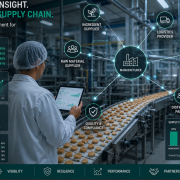
The businesses performing best are focusing on:

1. Supply chain resilience

Reliable suppliers reduce operational risk and protect production.

2. Visibility across spend

You can’t improve what you can’t see.

Accurate spend analysis allows procurement teams to identify opportunities and prioritise effort.

3. Supplier performance

Cost matters, but so do service levels, responsiveness, innovation and reliability.

4. Contract management

Regular reviews prevent contracts from drifting and ensure pricing remains competitive.

5. Continuous improvement

Cost reduction shouldn’t happen once every five years.

The strongest procurement functions continually review categories and look for opportunities to improve.

How Pare helps food manufacturers reduce costs

At Pare, we work alongside procurement and finance teams to uncover opportunities across indirect spend.

Rather than adding work to already busy teams, we manage the review process from start to finish.

Our clients typically achieve cost reductions of 15–20% across the categories we review.

More importantly, we help create greater visibility, stronger supplier governance and ongoing commercial control—ensuring savings are maintained long after implementation.

Final thoughts

The role of procurement has changed. The question is no longer:

“Are we paying the right price?”

It’s:

“Do we really understand where our costs, risks and opportunities sit?”

Food manufacturers that can confidently answer that question will be better positioned to improve margins, strengthen supplier relationships and build more resilient businesses.

Looking to reduce indirect spend without increasing your team’s workload?

Get in touch with Pare to discover how we help food manufacturers achieve sustainable cost reductions while improving visibility and supplier control.

https://www.pareprocurement.com/wp-content/uploads/2026/06/Stronger-insight.png 637 967 Helen https://www.pareprocurement.com/wp-content/uploads/2023/01/pare_Logo_600x184.png Helen2026-06-30 11:19:052026-06-30 11:19:05Cost Reduction in Food Manufacturing: Why Procurement Is No Longer Just About Negotiating the Lowest Price

Have you got control of costs in your business?

June 25, 2026/in Procurement/by Helen

A familiar pattern in UK food manufacturing right now:

Costs rise → budgets get cut → spend slows → pressure eases (briefly) → costs return.

This isn’t control, it’s a cycle. And many leadership teams are stuck in it, because cost cutting doesn’t change how spend behaves.

  • Cost cutting doesn’t fix:
  • Decentralised purchasing
  • Poor demand discipline
  • Lack of category ownership
  • Weak supplier management

So the system resets… and the costs come back.

If your only lever is “cut the budget,” you don’t have control, you only have a temporary brake and brakes don’t steer the business.


https://www.pareprocurement.com/wp-content/uploads/2026/06/Rising-costs.png 450 1130 Helen https://www.pareprocurement.com/wp-content/uploads/2023/01/pare_Logo_600x184.png Helen2026-06-25 09:34:002026-06-25 09:34:00Have you got control of costs in your business?

Do you have clarity before the tendering process begins?

June 18, 2026/in Procurement/by Helen

Tendering processes are often positioned as a straightforward way to improve cost, service, and supplier performance.

In reality, the outcome is only as strong as the clarity you have before the process begins.

We recently ran a tender exercise that we ultimately had to pause and withdraw.

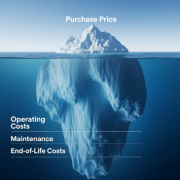
Not because the market wasn’t competitive, but because a key factor only became fully visible partway through the process: significant exit and transition costs within the incumbent contract.

These costs weren’t part of the headline pricing. They were embedded within the commercial terms and only surfaced once replacement scenarios were properly modelled.

It highlighted a common issue we see across procurement activity:

Decisions are often made based on the cost of going forward, without fully understanding the cost of coming out.

Other frequent challenges include:

  • Overlooking termination clauses and notice periods
  • Assuming contracts are more flexible than they actually are in practice
  • Hidden decommissioning, removal, or transition charges
  • Commercial lock-in through bundled services or dependencies
  • Underestimating operational disruption costs during changeover

The lesson isn’t that tendering doesn’t work – it’s that effective procurement starts before the tender is issued.

Understanding the true cost of exit is just as important as understanding the cost of supply. Without both, you’re not comparing suppliers, you’re comparing assumptions and assumptions rarely hold up once implementation begins!

https://www.pareprocurement.com/wp-content/uploads/2026/06/ICeberg-smaller-1.png 365 397 Helen https://www.pareprocurement.com/wp-content/uploads/2023/01/pare_Logo_600x184.png Helen2026-06-18 08:37:012026-06-18 08:37:01Do you have clarity before the tendering process begins?

How ‘resilient’ is your business?

June 10, 2026/in Procurement/by Helen

One of the biggest misconceptions in procurement is that resilience costs more.

In reality, resilience comes from visibility and the businesses best positioned to weather disruption typically know:

  • Who their critical suppliers are
  • Where they have supply risk
  • Which contracts are due for renewal
  • What they’re actually paying
  • Whether current pricing remains competitive

Many manufacturers have limited visibility over areas such as external lab spend, mobile communications, laboratory testing and other operational services.

But once you have gathered the data and benchmarked, opportunities emerge not only to reduce costs but also to improve service and reduce risk.

Resilience isn’t built during a crisis. It’s built before one.

https://www.pareprocurement.com/wp-content/uploads/2026/06/Cost-of-resilience.jpg 720 1082 Helen https://www.pareprocurement.com/wp-content/uploads/2023/01/pare_Logo_600x184.png Helen2026-06-10 08:53:302026-06-10 08:53:30How ‘resilient’ is your business?

How confident are you that every area of indirect spend in your business is delivering value?

June 4, 2026/in Procurement/by Helen

Food manufacturers are once again facing challenges they cannot directly control.

Recent industry data suggests food manufacturing SMEs have seen average sales revenue fall by 37% in Q1, reflecting growing economic uncertainty and supply chain disruption.

The Strait of Hormuz concerns are the latest reminder of how quickly global events can impact UK manufacturers.

In these situations, many businesses immediately focus on increasing sales, but during periods like this, protecting margin can be just as important as generating revenue.

The manufacturers navigating uncertainty most successfully are often those with a clear understanding of their costs, supplier relationships and operational spend.

In volatile markets, control becomes a competitive advantage.

https://www.pareprocurement.com/wp-content/uploads/2026/06/Uncertainty.png 864 1296 Helen https://www.pareprocurement.com/wp-content/uploads/2023/01/pare_Logo_600x184.png Helen2026-06-04 10:04:372026-06-04 10:08:46How confident are you that every area of indirect spend in your business is delivering value?

Why are savings on indirect spend so powerful?

May 28, 2026/in Procurement/by Helen

Unlocking 15% on raw materials often triggers retailer renegotiation.

But what happens when you unlock 15% on indirects?

EBITDA quietly improves!

Indirect categories are:

  • Off radar
  • Operationally fragmented
  • Data-poor
  • Supplier-led
  • Not often managed by procurement experts

Which means pricing discipline is often weak.

The opportunity isn’t usually dramatic, but its incremental….. and incremental across 10-20 categories starts to become material.


https://www.pareprocurement.com/wp-content/uploads/2026/05/EBITDA-1030x644-1.jpeg 644 1030 Helen https://www.pareprocurement.com/wp-content/uploads/2023/01/pare_Logo_600x184.png Helen2026-05-28 12:06:252026-05-28 12:06:25Why are savings on indirect spend so powerful?

Do we need to be buying this at all?

May 20, 2026/in Procurement/by Helen

One of the most overlooked aspects of indirect spend control is demand.

Most cost initiatives focus on:

  • Negotiating better prices
  • Consolidating suppliers

Both are important but they tend to miss the fundamental question of “Do we need to be buying this at all?”

In indirect spend, demand is often:

  • Unchecked
  • Habit-driven
  • Lightly governed (if at all!)

Think about what happens in business:

  • Rush courier requests instead of planned shipments
  • Over-spec’d PPE or consumables
  • Routine lab testing that’s never been challenged
  • “Just in case” purchasing behaviour

Spend control isn’t just about buying better. It’s about buying smarter and sometimes, buying less.

Because the easiest cost to remove…is the one you never incur.


https://www.pareprocurement.com/wp-content/uploads/2026/05/Cost-Reduction-2.jpg 612 958 Helen https://www.pareprocurement.com/wp-content/uploads/2023/01/pare_Logo_600x184.png Helen2026-05-20 09:55:042026-05-20 09:55:04Do we need to be buying this at all?

“We’ve been with them for years” is one of the most expensive sentences in business

May 6, 2026/in Procurement/by Helen

We worked with a food manufacturer who hadn’t reviewed their indirect spend categories in over a decade.

Why?

  • “Things work fine”
  • “Switching feels like hassle”
  • “No time to look into it”

But when we ran the full audit:

  • Numerous suppliers supplying same or similar products
  • Prices were above market rates
  • Data made meaningful analysis impossible

Outcome:

700k shaved of a £4m annual spend  – an 18% reduction, year after year!

No disruption and no operational risk.

But do you know what the real risk is?

Doing nothing.

https://www.pareprocurement.com/wp-content/uploads/2026/05/Doing-Nothing.png 421 631 Helen https://www.pareprocurement.com/wp-content/uploads/2023/01/pare_Logo_600x184.png Helen2026-05-06 10:28:462026-05-06 10:28:46“We’ve been with them for years” is one of the most expensive sentences in business

Is your business lacking structural control?

April 23, 2026/in Procurement/by Helen

Before the recent geopolitical shocks in the Middle East, UK headline inflation was beginning to look like it was stabilising around 3%—a welcome sign after years of volatility. But the war-driven energy spikes have made that stability fragile.

Beneath the headline numbers, cost pressures remain very real.  According to ONS 2026:

  • Food inflation still elevated (~4–5%)
  • Wage pressures continue to bite
  • Energy volatility is returning in 2026
  • Suppliers are passing through higher costs, keeping pressure on margins

What appeared to be a stabilising environment is masking a far more challenging reality for manufacturers and boards alike.

In other words, costs aren’t spiking, they’re sticking! And that’s where many businesses are exposed.

Because if your response has been:
“Cut budgets, pause spend, push suppliers”

Then you haven’t solved the problem. It’s just delayed it. Especially in indirect spend:

  • Contracts renew at higher rates
  • “Temporary” measures become permanent
  • Maverick spend returns as soon as pressure eases

This is why some businesses feel like they’re winning…Until 6 months later, they’re back in the same place.

The issue isn’t inflation. It’s lack of structural control.

https://www.pareprocurement.com/wp-content/uploads/2026/04/Copst-Control.png 423 1140 Helen https://www.pareprocurement.com/wp-content/uploads/2023/01/pare_Logo_600x184.png Helen2026-04-23 10:08:392026-04-23 10:08:39Is your business lacking structural control?
Page 1 of 3123

Categories

Latest Posts

  • Procurement Is More Than Running a TenderJuly 8, 2026 - 11:29 am
  • Cost Reduction in Food Manufacturing: Why Procurement Is No Longer Just About Negotiating the Lowest PriceJune 30, 2026 - 11:19 am
  • Have you got control of costs in your business?June 25, 2026 - 9:34 am
  • Do you have clarity before the tendering process begins?June 18, 2026 - 8:37 am
  • How ‘resilient’ is your business?June 10, 2026 - 8:53 am

Tel: +44 7973 343 323 or +44 7863 183 950 | info@pareprocurement.com

Pare is the trading name of Amitom, a limited company registered in England and Wales. Registered number: 11262046

Registered office: 6 Ffordd McCartney, Connah’s Quay, Flintshire, CH5 4FE

© Copyright - Pare Procurement
    • Privacy Policy
    • Who We Work With
    Scroll to top Scroll to top Scroll to top

    By continuing to browse the site, you are agreeing to our use of cookies

    Accept


    How we use cookies

    We may request cookies to be set on your device. We use cookies to let us know when you visit our websites, how you interact with us, to enrich your user experience, and to customize your relationship with our website.

    Click on the different category headings to find out more. You can also change some of your preferences. Note that blocking some types of cookies may impact your experience on our websites and the services we are able to offer.

    Essential Website Cookies

    These cookies are strictly necessary to provide you with services available through our website and to use some of its features.

    Because these cookies are strictly necessary to deliver the website, refusing them will have impact how our site functions. You always can block or delete cookies by changing your browser settings and force blocking all cookies on this website. But this will always prompt you to accept/refuse cookies when revisiting our site.

    We fully respect if you want to refuse cookies but to avoid asking you again and again kindly allow us to store a cookie for that. You are free to opt out any time or opt in for other cookies to get a better experience. If you refuse cookies we will remove all set cookies in our domain.

    We provide you with a list of stored cookies on your computer in our domain so you can check what we stored. Due to security reasons we are not able to show or modify cookies from other domains. You can check these in your browser security settings.

    Other external services

    We also use different external services like Google Webfonts, Google Maps, and external Video providers. Since these providers may collect personal data like your IP address we allow you to block them here. Please be aware that this might heavily reduce the functionality and appearance of our site. Changes will take effect once you reload the page.

    Google Webfont Settings:

    Google Map Settings:

    Google reCaptcha Settings:

    Vimeo and Youtube video embeds:

    Privacy Policy

    You can read about our cookies and privacy settings in detail on our Privacy Policy Page.

    Privacy Policy
    Accept settingsHide notification only